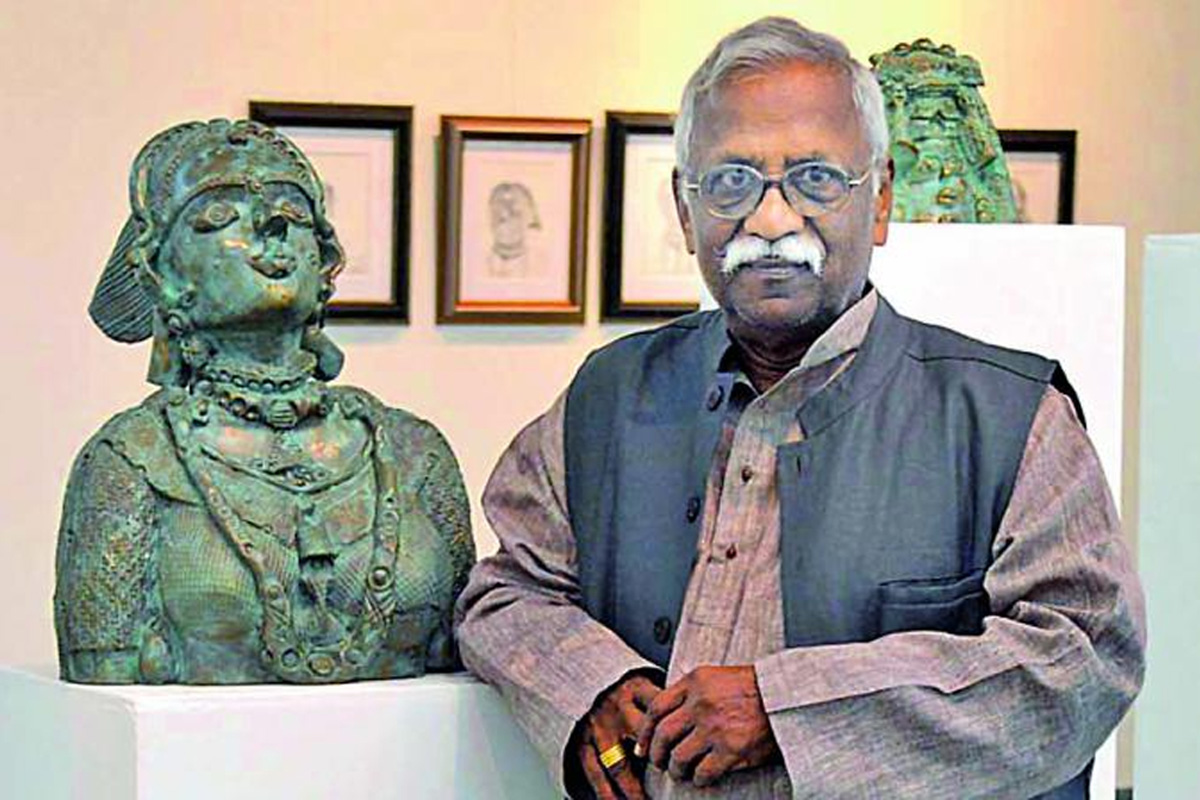
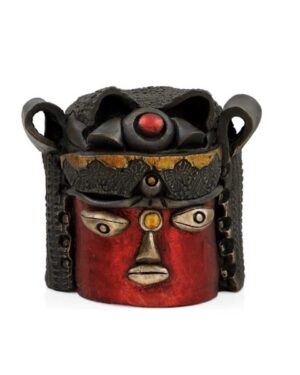
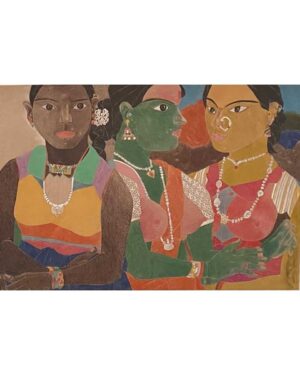
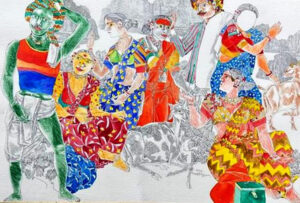
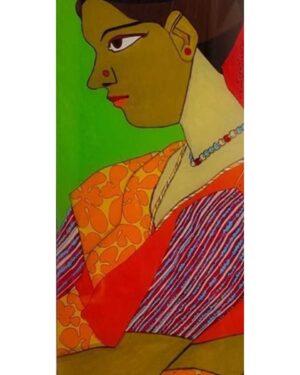
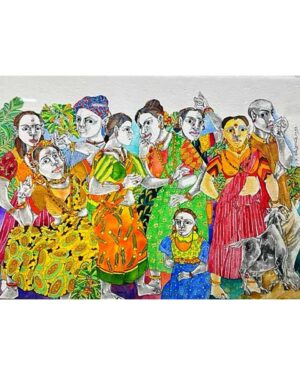
Kalal Laxma Goud, is an Indian painter, printmaker, and draughtsman who works in a variety of mediums including etching, gouache, pastel, sculpture and glass painting. Goud was born in Nizampur, Medak district in Telangana on August 21, 1940 to a family of toddy-brewers, K. Venka Goud and Anthamma Laxma Goud. He was schooled and encouraged to do further studies but a poor performance at matriculation made it difficult for him to join either the humanities or science so he landed up with art at the Government College of Art and Architecture, Hyderabad where he obtained a diploma in painting after 5 years of study. In 1963, he reached Baroda where he was exposed to contemporary art while learning traditional fresco techniques. Here, he came to realize ‘basic problems in life and art as an individual’ which brought him back to his village where he discovered what had eluded him during his schooling and study in art colleges. Goud was known for his depiction of eroticism in his works from early drawings which is consistent and clear since the beginning of his career in the 1970s.
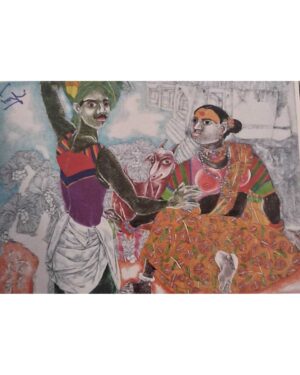
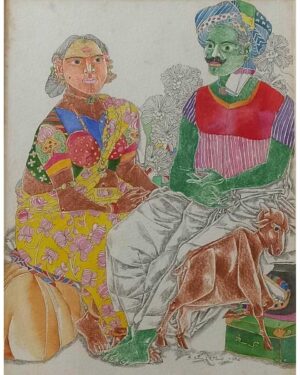
This obsession with the erotic can be traced back to his life in the village where his response to the erotic experience is most sensitive and vivid. In the village, he found an absence of taboos and inhibitions about sex, so predominant in the urban society he was currently living in. He recalled his childhood days in the village with experiences of the first stirrings of sex, he remembered ‘people living close together with animals, women abusing each other with plain sexual gestures and words during petty fights, a lone villager describing his amorous exploits in a song. The range of themes his work covers include explicit portrayal of sexual play without any symbolic undertones; entwined human, animal and nature forms in figuratively cohabiting postures; the invocation of the animus in nocturnal lights; and a subtle, psychological exploration of the male-female relationship tinged with gentle pathos. The unriddled sex-life in the village symbolized for him freedom from inhibitions that constrained the sexual experience of the city folk. The instinctive discovery of his won erotic sensibility triggered his imagination, stirring his animus into action and gave him glint of a unique expression he was seeking. Interestingly, it was urban education that made Goud discover his roots, an experience which inevitably led to a feeling of alienation and a sense of loss, for there was no necessity left to return to the village for good. This dual belonging has deeply affected his work, enriching and sustaining it.